


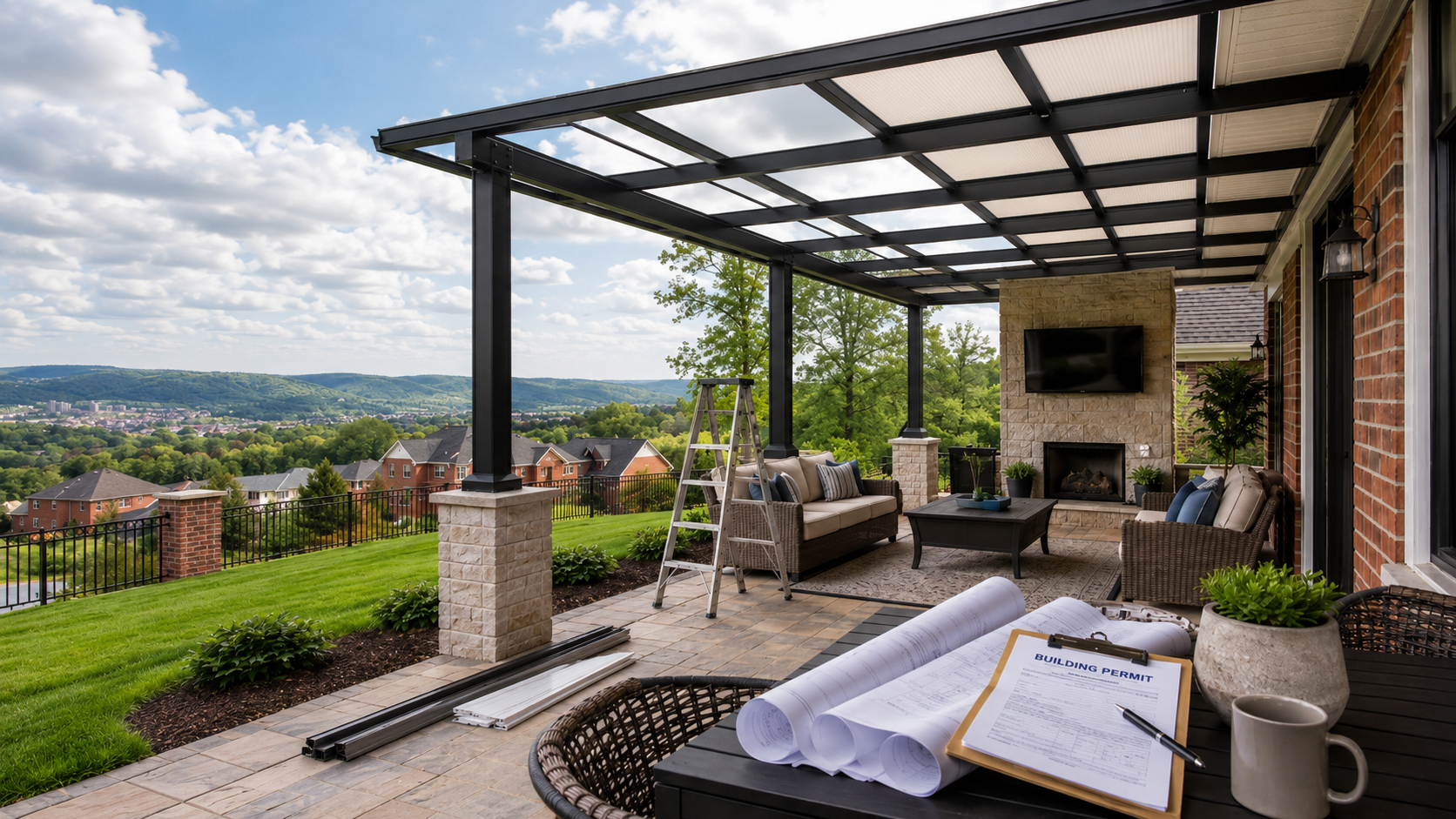
Adding a patio cover can make an outdoor space more comfortable during rain, sun, and changing Western Pennsylvania weather. Before installation begins, however, homeowners may need to determine whether the project requires a building permit, zoning approval, HOA approval, or another type of review.
The answer depends on the property, municipality, and patio cover design.
Permanent patio roof permits are often reviewed differently from umbrellas, removable canopies, or seasonal shade products in Western Pennsylvania. A permanent system may involve structural attachments, posts, footings, roof panels, drainage, snow load, wind exposure, and zoning concerns.
Homeowners should verify the requirements for their specific address with their local building or zoning office before beginning a patio cover installation in Pittsburgh or Western Pennsylvania.
Country Canvas Awnings designs and installs permanent patio roof systems for homes in the area. While an installer is not a legal or permitting authority, working with an experienced local company can help homeowners understand the practical questions to ask before selecting a product or finalizing a design.
Patio cover permit requirements vary across Pittsburgh and Western Pennsylvania. A homeowner in Pittsburgh may face a different process than someone in Bethel Park, Mt. Lebanon, Peters Township, Upper St. Clair, Canonsburg, Washington, or South Fayette.
Allegheny County advises property owners and contractors to file necessary permits in the municipality where the work is being performed. Homeowners can review general information about building permits in Allegheny County, but they should still contact their local municipality for specific permit types, requirements, and fees.
Local officials may consider:
Temporary shade products may include umbrellas, removable canopies, shade sails, and some seasonal fabric awnings. These products generally do not create the same type of permanent roofed area as an attached or post-supported patio cover.
A permanent patio cover is designed to remain in place throughout the year. It may connect to the home, rest on structural posts, require footings, or direct water through a planned drainage system.
Country Canvas Awnings offers permanent patio and deck roof systems for homeowners who want more lasting protection. Options include Natural Light Patio Covers, which allow daylight through, and metal patio covers, which provide solid overhead coverage.
roof
The structure, attachment method, size, and intended permanence of the system can affect how a municipality reviews the project, making it vital to check on the deck roof permit requirements in Pittsburgh.
An attached patio cover connects directly to the home, often near a kitchen, dining room, family room, or sliding glass door.
Because the structure interacts with the home’s exterior wall or roofline, officials may review attachment points, framing, roof pitch, drainage, and the condition of the existing structure.
A freestanding patio cover is not connected to the house, but it may still require approval. These systems can involve structural posts, concrete footings, setback requirements, height limits, and placement restrictions.
Neither design should automatically be considered permit-free. Each project should be reviewed according to the municipality, property conditions, size, and construction method.
Homeowners who are deciding between systems can compare patio cover styles before discussing the proposed structure with local officials.
Some homeowners focus only on building permits, but zoning approval may also be required.
Zoning rules can affect where a structure is placed and how much of the property may be covered. A local office may consider:
Even a relatively simple patio cover may create zoning questions depending on the address. Homeowners should contact the building or zoning office responsible for their property before work begins.
A permanent patio roof must handle more than sunlight. It remains outdoors through snow, rain, wind, temperature changes, and repeated freeze-and-thaw cycles.
Snow can add substantial weight to a roof, especially when it is wet or begins to drift. Wind can place pressure on roof panels, posts, fasteners, and attachment points.
Important design considerations include:
Panel and material selection
Framing strength
Roof pitch
Post placement
Footings
Attachment points
Water runoff
Gutter and drainage planning
An experienced installer understands why these elements must work together. Poor drainage may direct water toward a doorway, foundation, walkway, or neighboring property. Poor post placement can interfere with furniture, steps, or movement through the space.
Natural Light Patio Covers and metal patio covers are intended as more permanent systems than removable seasonal shade. Their design and installation should account for year-round exposure.
Municipal approval may not be the only requirement. Homeowners in an HOA, condominium community, planned neighborhood, or development with architectural standards may need separate approval.
An association may review:
Frame and roof colors
Roof panel styles
Visibility from the street
Attached or freestanding designs
Drainage
Approved materials
How the structure matches the home
HOA approval is separate from municipal permitting. Receiving one does not necessarily satisfy the other.
Homeowners should review their association documents and submit any required drawings, product information, color selections, or plans before scheduling installation.
Country Canvas Awnings designs and installs permanent patio roof systems for homes in Western Pennsylvania, helping homeowners choose a cover that fits their space, home, and intended use.
Professional planning may consider:
The size and shape of the patio or deck
The home’s exterior and roofline
Attachment locations
Roof pitch
Post placement
Drainage
Natural light near doors and windows
Desired shade and weather protection
Material and color preferences
A patio roof is exposed to rain, snow, wind, and seasonal temperature changes. Poor planning can contribute to water problems, awkward placement, insufficient coverage, or a design that does not fit the home.
An experienced installer can help homeowners gather useful product and design information before speaking with their municipality. Final permit, zoning, and inspection requirements should still be verified with the proper local office.
Before moving forward, homeowners should ask:
Will the cover be attached or freestanding?
Will posts or footings be required?
Does my municipality require a building permit, zoning approval, or both?
Are there setback or lot coverage rules?
Does my HOA need to approve the design?
How will the roof handle rain, snow, and wind?
Where will water drain?
Will the cover reduce daylight inside the home?
Would translucent acrylic or metal better fit my goals?
Which local office should I contact?
Pittsburgh homeowners can also review the city’s residential deck permit information. The guidance distinguishes between some low, uncovered decks and other deck projects that may require building and occupancy permits. It does not determine the requirements for every patio cover, but it shows why project design matters.
Natural Light Patio Covers provide rain protection while allowing daylight through the roof panels. This can be useful near kitchens, family rooms, dining areas, and sliding glass doors, where a solid roof may make the interior feel darker.
Metal patio covers provide solid overhead coverage and full shade. Available options may include insulated panels, flat pan panels, and W-Pan systems.
Country Canvas Awnings can help homeowners review patio and deck roof systems we offer that are tailored to their home, outdoor space, desired coverage, and design preferences.
Every property is different. Permit requirements, zoning restrictions, HOA rules, and structural considerations can vary by municipality and address.
This article provides general guidance and is not legal advice. Homeowners should contact their local building or zoning office to confirm the requirements for their project.
Country Canvas Awnings designs and installs permanent patio roof systems for homes in Western Pennsylvania. To discuss your property, product options, and outdoor living goals, request a patio cover consultation.
They may require building or zoning approval depending on the design, size, location, attachment method, and property. Requirements should be verified with the City of Pittsburgh.
Possibly. Local officials may review its height, placement, setbacks, footings, and structural design even when it is not attached to the home.
They can be. Temporary or retractable shade products may be reviewed differently from permanent roof systems.
Some associations require approval before installation. HOA approval is separate from municipal permitting.
Yes. Country Canvas Awnings can help homeowners compare Natural Light Patio Covers, metal systems, and other permanent patio roof options for their home and outdoor space.

Your investment is safe under the care of our experienced staff of awning professionals. Enhance your home and make the most of our outdoor space with our help!
Call Country Canvas Awnings at 724-228-2707 or use the form to get more information or to schedule your service.
Country Canvas Awnings has referred several customers to Dollar Bank for financing. Learn more information about financing with Dollar Bank.