

Yes. The right patio-cover material can reduce solar heat while still allowing useful natural light to reach the patio and nearby rooms.
A translucent acrylic patio cover works differently from a solid roof. Instead of blocking all overhead sunlight, it allows visible daylight through while reducing infrared heat transmission and filtering ultraviolet radiation.
For Pittsburgh and Western Pennsylvania homeowners, that balance can be especially valuable when a patio sits outside a kitchen, dining room, family room, or sliding glass doors. You can gain permanent overhead protection without automatically making those spaces feel significantly darker.
Heat, visible light, and ultraviolet radiation are different parts of solar energy. A patio-cover material doesn’t have to treat all three the same way.
That is what makes translucent acrylic systems useful for homeowners who want shade and weather protection without completely blocking daylight.
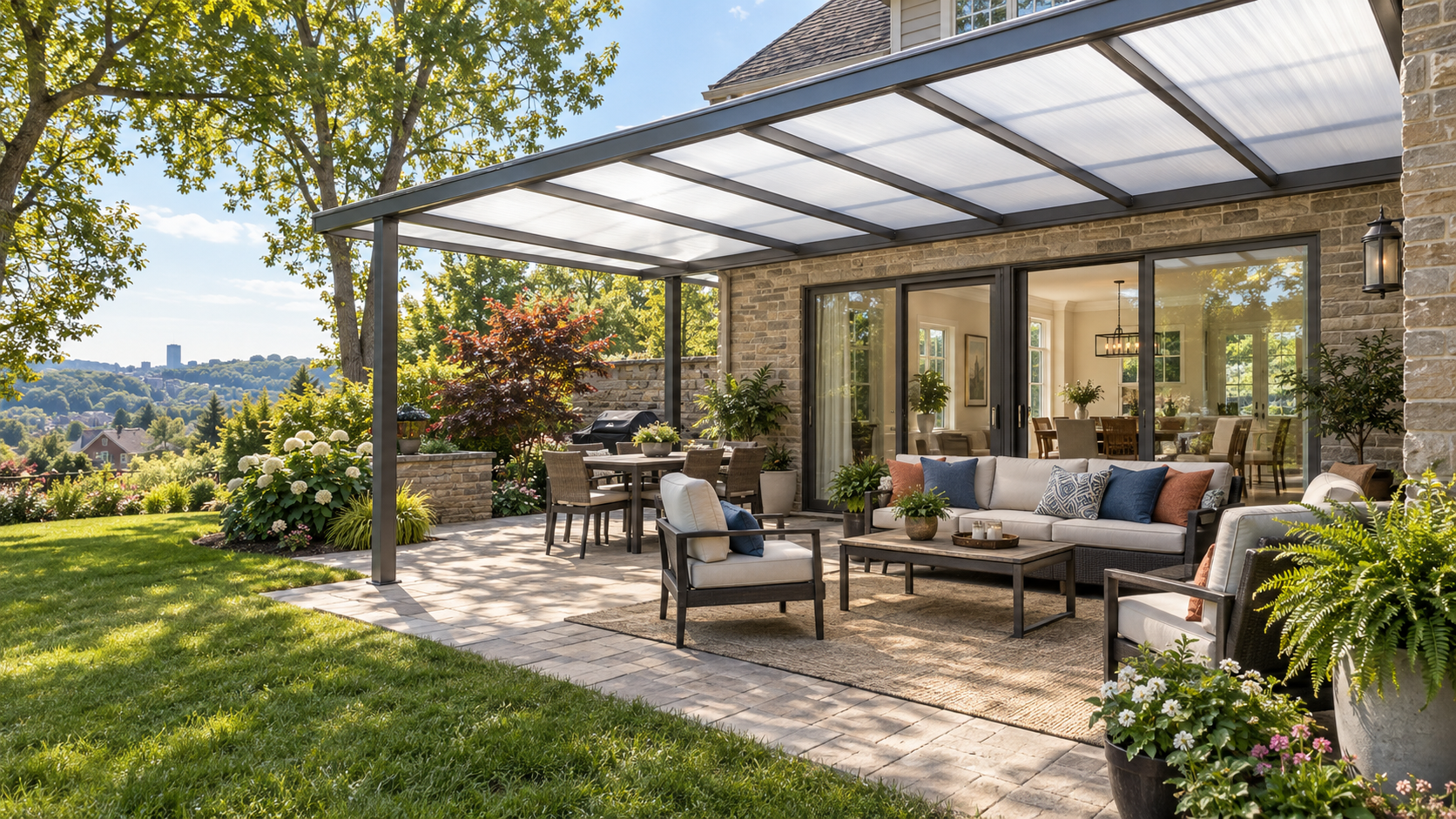
Country Canvas Awnings’ Natural Light Patio Cover materials have acrylic panels that transmit natural light. At the same time, the HeatStop feature reflects infrared radiation and can block up to 75% of the sun’s heat. The panels are also described as blocking nearly 100% of UV radiation.
The important distinction is that this is a material-performance claim. It does not mean the air underneath the cover will be 75% cooler.
Outdoor temperature, humidity, wind, patio orientation, surrounding surfaces, and shade conditions still affect how comfortable the space feels.
Understanding the three main parts of sunlight makes it easier to see why a translucent roof can stay bright without letting solar energy through in the same way as an uncovered patio.
Visible light is the portion of sunlight that creates the brightness we see.
A translucent acrylic roof lets some daylight pass through while diffusing it across the covered area. This helps maintain a brighter patio than an opaque roof would.
It can also help preserve daylight reaching windows and glass doors located behind the patio.
Infrared radiation contributes to sunlight’s warming effect.
At Country Canvas, our HeatStop feature used in our Natural Light Patio Covers reflects infrared radiation and can block up to 75% of the sun’s heat.
Reducing that solar heat transmission can make the area beneath the roof more comfortable than sitting in direct overhead sunlight, but it does not create a climate-controlled outdoor room.
UV radiation is another component of sunlight.
According to Country Canvas product information, the acrylic panels block nearly 100% of UV radiation while still transmitting natural light.
That is why “letting light through” does not necessarily mean allowing every part of sunlight to pass through at the same level. Blocking the UV radiation helps to protect furniture and outdoor decorations from UV damage.
Yes, it can still feel warm beneath a translucent patio cover, especially on a hot, humid Pittsburgh afternoon.
A patio roof primarily changes your exposure to the sun. It does not lower the outdoor air temperature.
Reducing direct solar exposure can improve comfort because people, furniture, and patio surfaces beneath the roof no longer receive overhead sunlight the same way they would on an uncovered patio.
However, heat can still come from surrounding concrete, masonry, walls, furniture, and other surfaces that have warmed throughout the day.
The sun’s angle also matters. A west-facing patio may receive strong late-afternoon sunlight from the side even when the overhead area is covered. Trees, neighboring buildings, rooflines, and landscaping can also affect how much sunlight reaches the patio.
That is why the “up to 75%” HeatStop claim should be understood as a reduction in solar heat transmission through the material, not as a promise that the patio itself will be 75% cooler.
It depends heavily on the roof type.
A solid patio roof blocks overhead daylight entirely. If the patio sits directly outside windows or glass doors that provide much of a room’s natural light, the difference inside may be noticeable.
This matters most for kitchens, dining areas, and family rooms that open directly onto a patio or deck.
A translucent acrylic roof takes a different approach. Because daylight can continue passing through the panels, homeowners can add permanent overhead coverage without eliminating the light above those openings.
That may be particularly appealing in Western Pennsylvania, where cloudy periods and shorter winter days can already limit natural light.
Before choosing a patio roof, consider the home as a whole rather than focusing only on how much shade the patio will receive.
Important factors include the patio’s direction, the proposed roof depth, existing trees or nearby structures, the size and position of adjacent windows, and how much the interior room depends on those openings for daylight.
Neither roof style is universally better. The right choice depends on what you want the space to do.
A solid patio roof may be the better fit when maximum overhead shade is the main priority. Because it blocks overhead daylight, it can create a darker and more consistently shaded area beneath the structure.
A translucent acrylic roof suits homeowners who want a different balance. It can provide permanent rain protection, UV filtering, reduced solar heat transmission, and continued natural light.
The tradeoff is intentional: a translucent system still allows daylight into the space. If your only goal is creating the darkest possible shade, a solid roof may better match your expectations.
If maintaining brightness, both outside and in the rooms behind the patio, is important, a translucent system may deserve stronger consideration than something like a pergola.
A Natural Light Patio Cover may be a good fit when the patio sits outside major windows or sliding doors, preserving indoor daylight is important, and you still want permanent protection from rain and direct overhead sun.
It may also appeal to homeowners who want UV filtering and reduced solar heat without creating the enclosed feeling of a completely opaque roof.
A solid roof may make more sense when deep shade is more important than natural-light transmission.
The decision should ultimately reflect your home’s layout, orientation, existing shade, roof projection, and how you expect to use both the patio and the rooms behind it.
Before choosing a system, discuss your home’s conditions with an experienced patio-cover installer.
Useful questions include how much direct sun the patio receives, which direction it faces, which indoor rooms sit immediately behind the proposed cover, how far the roof will project from the house, what material and tint will be used, and what heat and UV performance claims the manufacturer documents.
You should also ask how the system is engineered for local weather, how it will handle rainwater, and what permit requirements may apply in your Western Pennsylvania municipality.
These details can matter just as much as the appearance of the roof itself.
Installing a patio cover doesn’t necessarily mean choosing between an exposed, sunny patio and a dark, permanent roof.
A translucent acrylic patio cover can offer a middle ground by continuing to transmit daylight while reducing infrared heat and filtering UV radiation.
Country Canvas Awnings’ Natural Light Patio Covers are designed around that balance. According to the company’s product information, the acrylic panels diffuse natural light, block nearly all UV radiation, and use infrared reflection to block up to 75% of the sun’s heat.
Those benefits don’t guarantee a specific temperature, and a translucent roof may not be the best choice for every home. Patio orientation, surrounding shade, adjacent windows, roof depth, and personal preferences all affect the decision.
For Pittsburgh and Western Pennsylvania homeowners considering a permanent patio cover, Country Canvas Awnings can help you compare Natural Light Patio Covers with solid-roof options based on the shade, daylight, and weather protection you want for your home.

Your investment is safe under the care of our experienced staff of awning professionals. Enhance your home and make the most of our outdoor space with our help!
Call Country Canvas Awnings at 724-228-2707 or use the form to get more information or to schedule your service.
Country Canvas Awnings has referred several customers to Dollar Bank for financing. Learn more information about financing with Dollar Bank.